The One With The Whales
Chad Kirchner (00:28)
Whoa, that's a theme song. don't know. You know, let me know if you like it. But we're here for another episode of the my Star Trek podcast that is called Temporal Investigations, because I think it's such a great ⁓ aspect of Star Trek that has never been thoroughly explored. And the idea here is, of course, to talk about maybe not modern, like in like the most recent episode recaps, but just cover kind of the bigger topics and theories and stuff around trucks. So today I've got
Andrew Thaler (00:30)
you
Chad Kirchner (00:58)
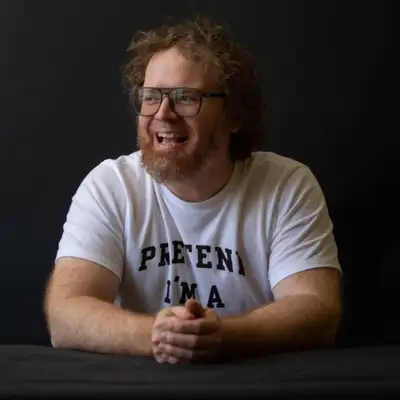
two incredible guests with me. One, he's a Canadian, don't hold it against him. I don't know if he's drinking any of our bourbon right now, probably not at all. He is probably one of my oldest friends in the business that is not Star Trek. He's a comic book author. He is a freelance writer. He is a man of the world. Mr. Benjamin Hunting, hello. And
Benjamin Hunting (01:07)
You
Greetings, Chad.
Chad Kirchner (01:26)
Greetings to you as well. Thanks for being here. And when I first thought about Ben's been giving me a lot of crap about, okay, when are you going to do this podcast? When are you going do this podcast? So I knew that when I started kind of putting things together, I knew I wanted to have this particular discussion we're going to have today because I happen to follow somebody on social that I think is an actual expert in things that I am definitely not in. And today we're going to talk about the ocean and whales. And I figure
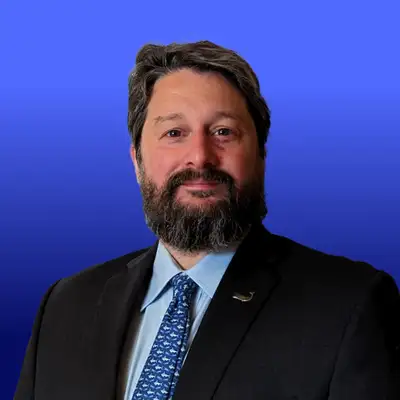
why I have an ocean expert on. So I don't have his official title in front of me because I closed the window that had it on. Dr. Andrew Thaler, how are you? Welcome.
Andrew Thaler (02:07)
I am great, thank you for having me.
Chad Kirchner (02:10)
And since I closed the window with your title, ⁓ what is it?
Andrew Thaler (02:15)
So I am a rogue academic, I'm a benthic mercenary, I'm a man with no real title, ⁓ but I run a small environmental consulting firm on the Maryland Eastern Shore where we focus on high seas policy, conservation technology, and ocean education.
Chad Kirchner (02:32)
And some of the technology I definitely want to talk about towards the end here, because I think you're working on some pretty cool projects. ⁓ But I wanted you on here because I wanted to talk about whales. Well, more specifically, whales, but also like the ocean in general. you kind of where I want to start with this is actually kind of based off of an article you wrote back all the way in, I think, 2015, talking about the idea of a space whale and
Andrew Thaler (02:43)
Wales.
Chad Kirchner (03:01)
science fiction is sort of full of you would think science fiction would be very space focused and it is but there's so much ocean in that space and kind of what i mean by that is like you've got full series devoted to the ocean sequestering dsv for example i know ben and i had watched at one point and enjoyed ⁓ there yeah first run saw it on tv yeah ⁓ you know obviously there there's
Benjamin Hunting (03:23)
during the first run.
Andrew Thaler (03:24)
excellent.
Chad Kirchner (03:30)
Jules Verne stuff, is, you know, there's, mean, Moby Dick is obviously whale, you know, in a very non-space way, but how many times has Moby Dick been quoted in Star Trek? Just in Star Trek, just in Star Trek First Contact, there's like Shakespeare and Moby Dick and like that is the...
Andrew Thaler (03:43)
constantly.
Benjamin Hunting (03:51)
The only
texts that have survived for the hundreds of years into the future. We don't get anything else, sorry.
Chad Kirchner (03:54)
Right. After the,
after the upcoming third world war. ⁓ But like
Benjamin Hunting (03:59)
Sorry Hemingway.
Andrew Thaler (03:59)
Mm-hmm. Well, and of course,
one of the most prevalent tropes in all space science fiction is that space is an ocean.
Chad Kirchner (04:07)
space is an ocean. ⁓
Benjamin Hunting (04:09)
I think it's the only
way we can conceptualize something so vast, right?
Chad Kirchner (04:12)
Well, is that,
Andrew Thaler (04:12)
I think that
Chad Kirchner (04:13)
I
Andrew Thaler (04:13)
is true, yeah.
Chad Kirchner (04:13)
mean, is that your theory too on that? Like, hey, that's, it's the best way to picture it. Cause like the ocean and space are very different, but in some ways both. mean.
Andrew Thaler (04:22)
I think structurally, just the way that we
Benjamin Hunting (04:24)
Hahaha! ⁓
Andrew Thaler (04:26)
think about exploration
is a very maritime focus kind of framework. So, you you think about exploring space, we're talking about ships. You've got your captain, you've got your crew. you know, a space exploration is going to be structured the same way that a Nazi exploration will be. That's how we kind of structure those kinds of endeavors. you know.
Space is vastly different from traveling the ocean in a lot of really, really specific and really important ways. ⁓ But like, you know, you're still a bunch of guys on a ship, sailing around looking for weird stuff.
Chad Kirchner (05:00)
Right.
Looking for weird stuff. And the ocean is home of some... And the ocean is known for weird stuff.
Benjamin Hunting (05:03)
Looking for vitamin C.
Andrew Thaler (05:10)
Well, absolutely.
I mean, the ⁓ confluence of deep sea ecology, which is where my expertise lies, and astrobiology is ⁓ very close. We do a lot of astrobiology work is based off of discoveries in the deep sea.
Chad Kirchner (05:28)
So we're obviously going to talk about Star Trek for the Voyage Home, the one with the whales, at some point during this. But that isn't the only big ocean slide, specifically whales reference in Star Trek. So that's the one probably a lot of people will think of. But I know that pre-Star Trek the Next Generation, during sort of the initial technical drawings and technical details of that, it was conceptualized that the Enterprise-D would have
Andrew Thaler (05:32)
The one with whales.
Chad Kirchner (05:57)
a cetacean ops, a water on board with whales to help with stellar navigation. I'm not quite sure if I understand how that works.
Benjamin Hunting (06:07)
Can you imagine being inside
a giant tank that is like subject to the inertial forces that we regularly saw on the enterprise, you People are falling around on the bridge. What does that do to like an entity that's inside a tank? I'm assuming it's in a tank and they don't have a crazy apparatus.
Chad Kirchner (06:15)
All right.
Andrew Thaler (06:18)
You
Chad Kirchner (06:23)
Yeah, well, no,
mean, canonically, they're in a tank ⁓ because we
Andrew Thaler (06:28)
That would be, even
the Enterprise is not big enough to have a tank that would appropriately store something like a humpback.
Benjamin Hunting (06:34)
It would need
like a third saucer, second saucer section just for the whales.
Chad Kirchner (06:37)
Well,
Andrew Thaler (06:37)
it need
way more than that. Humpback whales need like the entire Pacific Ocean for good natural ranging.
Chad Kirchner (06:38)
other part is.
So they would not have survived long in the holding bay of a Klingon bird of prey then.
Andrew Thaler (06:50)
That would have been a very short trip. They would have not liked that at all.
Chad Kirchner (06:56)
So, ⁓ but okay, so a trip through back time.
Benjamin Hunting (06:57)
A trip through time of indeterminate length.
Andrew Thaler (06:58)
Well, that's true.
and a trip
to their ultimate doom.
Chad Kirchner (07:05)
You think though, like, you know, sometimes you get a fly or a bug that lands on your windshield in one town and it follows you to the next town and you're probably... Sometimes you think like, what's that world like now different for that creature? Kind of feel like that with the whales. Like, they left ⁓ a time where there were a bunch of whales and they knew everything and suddenly now they're in this weird, this very super quiet ocean. But we don't know if all whales are extinct. Like, they imply that all whales are extinct, but they really only talk about the humpbacks being...
Benjamin Hunting (07:24)
super quiet ocean.
Good point.
Chad Kirchner (07:34)
So it's kind of ⁓ hard to say there, but the Enterprise D is bigger than most people think. Now I'm not saying it's big enough to house whales on a permanent basis, but recently I would say within the last year or two, I saw somebody kind of do a breakdown of like, if you look at the dimensions of the Enterprise D and the crew complement, the odds of you actually seeing anybody during a normal shift are extremely low because it's...
so massive it's a nearly a kilometer long it's 42 decks there's only a thousand people on board so some people have like used that as the way to hand wave ⁓ well you don't see a lot of people in the corridor because you would never see anybody
Benjamin Hunting (08:15)
plus how much of that space is just cargo bays because they seem to be an unlimited number of cargo bays
Chad Kirchner (08:20)
There are,
yeah, well, you gotta have a new place to nearly kill Worf nearly every other episode. But then.
Benjamin Hunting (08:24)
Yeah, yeah, some barrels have to fall on wharf somewhere
Andrew Thaler (08:29)
Well, and you know
if you look at it because I haven't I haven't pulled the numbers for the enterprise D But the original enterprise is actually just slightly smaller than the aircraft carrier enterprise
Chad Kirchner (08:40)
Indeed. And that holds a lot more people there, Carp Carriers, there's like 5,000 people. Yeah. And the Enterprise had 240, canonically 240 at the beginning through Strange New Worlds and then late TOS they had 400. So, well, I would think that the computers would be able to do a lot of that work, even though ⁓ the Ultimate Computer episode, it shows that the computers can't run all of that. It's very...
Andrew Thaler (08:44)
yeah, aircraft carriers like cities, they're unbelievable.
Benjamin Hunting (08:45)
Yeah.
Yeah.
Andrew Thaler (08:56)
They're like running a skeleton crew then.
Benjamin Hunting (09:09)
And we didn't learn that lesson. Look where we are now.
Chad Kirchner (09:11)
We
didn't, we really, honestly, we really didn't, which is ⁓ like other hours and hours of discussion. So ⁓ the original drawings for the Enterprise-D had a place for whales ⁓ because they would help, I still don't know how they would help in celestial navigation. Maybe you can clear that up for me.
Andrew Thaler (09:26)
Yes.
so, you know, I am, I'm not fluent in humpback whale and I am not deeply plugged into their cultural touchstones and their skills as wayfinders. But my general understanding is that their navigation is not primarily celestial navigation.
Chad Kirchner (09:39)
Okay.
Right.
Benjamin Hunting (09:52)
which would, you know,
make a lot of sense.
Andrew Thaler (09:54)
They are underwater
and they're not particularly visual animals. They have tiny little eyes. They can't really see in front of them or look up or any of that. ⁓ They are, they navigate with sounds. They are signiferous navigators. And space very famously is the one place where no one can hear you scream.
Chad Kirchner (10:06)
Okay.
Indeed.
Very much so. Which that also there's a lot of sort of ⁓ space kind of misconceptions too. Elon Musk thinks he can put servers in space and it's cold there so it'll keep the servers cool. Like that's not how thermodynamics works though. Yeah we are all we're all in space.
Benjamin Hunting (10:29)
I mean, you can put anything in space.
Andrew Thaler (10:31)
Yeah, well everything's already in space. We were talking about space whales.
Benjamin Hunting (10:33)
Very good point.
Andrew Thaler (10:37)
All whales are space whales.
Benjamin Hunting (10:38)
So Diaz,
in SeaQuest,
Chad Kirchner (10:40)
indeed.
Benjamin Hunting (10:40)
what did Darwin the Dolphin do? I don't remember. I remember there were little channels in the ship where it swam around and it talked to Jonathan Brandis a lot, right? But I don't remember Darwin's skill set.
Chad Kirchner (10:46)
Yeah, he would follow people around. would follow people around.
Andrew Thaler (10:48)
Yeah, he did mischief.
Chad Kirchner (10:51)
It's dead. Yeah. Yeah.
Andrew Thaler (10:52)
You
He was a diplomat. He did communication with other dolphins. Yeah.
Chad Kirchner (11:00)
Yeah, he did do that. He,
Benjamin Hunting (11:01)
Okay.
Chad Kirchner (11:02)
⁓ I think he did some, ⁓ reconnaissance kind of stuff. I believe instead of sending a probe out, they would send the dolphin. ⁓
Benjamin Hunting (11:10)
would send out the most vulnerable member of their crew.
Andrew Thaler (11:12)
So what's funny about
Darwin is that animatronic that they made ⁓ is one of the best dolphin animatronics ever made. It's still around and you see it in a bunch of random TV shows and a bunch of other random productions. You can kind of like you'll spot it every so often. I think the last time I saw Darwin was on an episode of Unbreakable Kimmy Schmidt where I guess the rich boyfriend had like brought her a dolphin.
Benjamin Hunting (11:20)
Is it still around?
Chad Kirchner (11:35)
you
Benjamin Hunting (11:37)
You
Chad Kirchner (11:38)
You
Andrew Thaler (11:39)
And it was the Darwin animatronic. And you look at it, you're like, that
is the Darwin animatronic.
Chad Kirchner (11:43)
Yes.
Benjamin Hunting (11:43)
I mean,
bringing a dolphin anywhere is a power move. That's like, you show up at a party with a dolphin, it's your party now.
Chad Kirchner (11:51)
Well, I mean, gotta get your money. I mean, the costs of that dolphin have to be amortized over, you know, a long period of time, so.
Benjamin Hunting (11:57)
Now that dolphin
was a working dolphin. mean, it's earning its keep. Yeah. Yeah.
Andrew Thaler (12:00)
Yeah, definitely. He's gotta be Union.
Chad Kirchner (12:03)
Yes,
yes. And actually, I questions very much like a spaceship actually, they did a science and alien kind of episode too. But, and then canonically, it was mentioned in yesterday's enterprise that cetacean ops existed, though, some will say that that's a mishearing of the, the audio track and they actually mean cetacean ops, because you hear it over, you hear it over the, the PA and send forward.
Andrew Thaler (12:25)
Huh.
Yeah, you know, I like the idea that the Federation has figured out how to get cetaceans involved in their operations,
Chad Kirchner (12:34)
well
Benjamin Hunting (12:35)
I mean they probably encountered
cetacean like races right like we can assume the universe is big enough for that to happen.
Chad Kirchner (12:38)
Yeah, and canonically,
Andrew Thaler (12:38)
yeah.
Chad Kirchner (12:42)
do have whales on ships. I know it's lower decks, and maybe y'all haven't seen all of that. an amazing show. But they're...
Andrew Thaler (12:44)
Yes.
I have seen all of it. In fact, that was my
reintroduction into Star Trek after a 20 year absence.
Chad Kirchner (12:56)
Yeah, it's so good. Oh my gosh. But yeah, there's two whale characters. They're both Lieutenant Junior grade too, so they outrank the main cast for like the first three seasons, which is funny. And it's funny. They're funny characters. The whole show's obviously funny. It's good Star Trek though. they're good. Both animated shows, I will die on this hill, both animated shows were very good Star Trek.
Andrew Thaler (13:11)
as they should.
Chad Kirchner (13:26)
Lower decks for both there were good Star Trek stories and it was also funny but prodigy was Like very intelligent like it was it was it was good Star Trek. Yes It was tailored to an audience much younger than me, but it didn't but it took that audience. Seriously didn't treat them. It didn't you know, It didn't handle them with kids gloves like they had some really serious issues and ⁓ it had Catherine Janeway in it, which that's Andrew's
Andrew Thaler (13:54)
The best captain.
Chad Kirchner (13:55)
Andrew's favorite captain. was, I forgot in my intro intro, I was going to say that ⁓ Andrew's favorite captain is, or his character is Catherine Janeway and his favorite show is Voyager, ⁓ including Threshold Janeway.
Andrew Thaler (14:04)
Absolutely.
I mean, you know, you gotta take
Benjamin Hunting (14:11)
I
was disturbed by that email by the way to get that.
Andrew Thaler (14:12)
the good with the bad. You gotta take the good with the bad. Like, you're either all in or you're all out. And like, I'm all in on Voyager. It had its highs and it had its lows.
Chad Kirchner (14:15)
⁓
It did.
It did. Some amazing characters. think Jamie was a great character. ⁓ Jerry Ryan of Seven of Nine. She was written so well. ⁓ She was dressed kind of terribly, but ⁓ she was written very well. Yeah, everybody was dressed terribly. Yeah, we did. But I love that she's back in modern track. She does such a great job as a modern, ⁓ more...
Andrew Thaler (14:38)
Here's the late 90s, early 2000s. You know, we had strange priorities back then.
Yes.
Chad Kirchner (14:51)
more disconnected from the hive Borg while still being very, still very Borg. It's great. I could do a whole episode devoted to her. And Ben, we are talking about a little bit of the one with the whales. His favorite series, he comes back and tells me is the TOS movies, which might have been some, I mean, I know some people's first exposure to Star Trek was going to the movie theater. I don't know if that was yours, Ben, but.
Andrew Thaler (15:09)
Okay, those are good.
Benjamin Hunting (15:17)
No,
Andrew Thaler (15:17)
mean
Benjamin Hunting (15:17)
I grew up watching...
Andrew Thaler (15:17)
Wrath of Khan is probably my favorite of the movies.
Chad Kirchner (15:20)
Yeah.
Benjamin Hunting (15:20)
Yeah,
it's mine as well. I grew up watching the original series on CBC reruns.
⁓ my mom liked watching the show a lot too. So we would watch together, but I remember as a kid, the, the first Star Trek movie I saw was wrath of con taped off of ABC around Thanksgiving. And I remember I have distinct memories of eating leftover Thanksgiving dinner, watching that and like understanding the concept of friendship and what friendship ultimately could be. And like that it's such a core memory for me as a, as a person. ⁓ and then, you know, extrapolating that through the remainder of
series.
Chad Kirchner (15:57)
And then your favorite character, which is a totally valid character, the USS Enterprise. Though you didn't say whether it was the original or any no bloody A, B, C, or D, as Scotty would say.
Benjamin Hunting (16:02)
Yeah, I think so.
I'd say the movie ones as
well. Just like, I love the redesign that they did for the motion picture, which is not a great movie, but does have like 35 to 40 minutes of beauty shots of that enterprise because they were so proud of it.
Chad Kirchner (16:17)
It does. It does. It's actually
not as long as you think it is. Like you sit down and time it. And they just did a 4k remaster recently-ish, as in the past couple of years. And it looks really good. It's about the limit of what they're going be able to do with that movie without really not making it look better. ⁓ Because you can see a lot of the matting and stuff and how they did the special effects now. But it's...
Benjamin Hunting (16:29)
Yeah.
Chad Kirchner (16:45)
It's it's a good episode of star trek just like we were saying earlier then insurrection is a good episode of star trek. Maybe not a movie Yeah, maybe not a movie, but a good episode. I con is right the con is probably Every time I watch it I pick up something new or i'm surprised by some way that they handle something in it like it is such a good movie it's
Andrew Thaler (16:53)
Yeah.
Benjamin Hunting (17:08)
I mean, they
managed to not just create a really exciting action-like movie, which hadn't really been done in Star Trek to that point, but they also
did a deep dive on the theme of aging and one's place in the world and one's relation to other people who are also aging who maybe have it a little bit more figured out than you do. And that was done in a really fluid way and surprising for a film that shouldn't be about any of that. In theory, you're not selling any of that to the executives who greenlit this movie, especially the ones who were super upset about the first one's performance. And yet they managed to shoehorn all of this into a plot.
Andrew Thaler (17:21)
Yeah.
Chad Kirchner (17:44)
I think that Kirk was supposed to be what, 52 in that movie? Something like that. Not really that old. I'm feeling ancient. Right. Right. Yeah. Yeah. No. Time, man. Time. It is always a blood circle. So what is science fiction in Star Trek? mean, speaking of more ocean stuff.
Benjamin Hunting (17:48)
Yeah, yeah. And feeling ancient.
Andrew Thaler (17:52)
Yeah. God.
Benjamin Hunting (17:58)
yeah it was a flat it was a flat circle even back then
Andrew Thaler (18:01)
yeah.
Chad Kirchner (18:12)
The Voyager episode, 30 days, where Tom Paris gets demoted. It's that big ocean, the big ocean planet kind of in space that is about ready to fall apart in the water, kind of everywhere. ⁓ But then you go into specifically into whales. You've got the whales from Star Trek IV. You've got whales helping the Enterprise fly around. You have the Galaxy Child's whales from
the next generation that tries to mate with the ship. You've got a Voyager episode where another group of space whales try to mate with the ship. ⁓
Benjamin Hunting (18:48)
Is encounter at four
point technically a whales episode? Is that almost a space whale?
Chad Kirchner (18:52)
⁓
Andrew Thaler (18:54)
I guess it depends on how you
Chad Kirchner (18:54)
it's close.
Andrew Thaler (18:56)
define a space whale. It could be. Yeah.
Benjamin Hunting (18:58)
Exactly.
Chad Kirchner (19:00)
You have you have Gormaganders from Discovery. And then like recently, like the Jump Cannon here, the Ahsoka series had the whales that can go light speed. You know, you reference your story, which will be in the show notes, the Doctor Who episode with the whale with with London on its back. What's up with the whale?
Andrew Thaler (19:23)
Yep. And most recently,
Humpbackz made a return in Starfleet Academy.
Chad Kirchner (19:29)
Yes, yes, yes. They are there. they're still, the offspring of George and Gracie are still there in the 32nd century.
Andrew Thaler (19:30)
They are canon at Star Trek High.
That
was some of the worst CGI whales I've seen in a long time. It was not impressive.
Chad Kirchner (19:44)
They were pretty bad.
They were pretty bad. Yeah.
Benjamin Hunting (19:48)
Speaking of bad CGI, I Andromeda and Farscape both had space whales as well. ⁓
Andrew Thaler (19:52)
Yeah. Well, the Leviathan of
Sp- Farscape was a space whale.
Benjamin Hunting (19:57)
Yep.
Chad Kirchner (19:58)
So why whales? Why ⁓ is science fiction more fascinated with whales than let's say dolphins or any other kind of sea creature?
Andrew Thaler (20:06)
I
think it comes back to a story that we've mentioned several times already, and that is Moby Dick. Moby Dick is kind of the quintessential mad captain expedition, a crew against the universe fighting some massive godlike force that they can't really understand, but which they know they just have to hunt because it's hunting them as well. And I think a lot of...
Science fiction draws from the themes of Moby Dick, and especially when we get into space and we're looking for good, you know, adventure stories, good expedition stories. You you think about kind of the classic stories that end up being retold in space over and over again. You've got Treasure Island, you've got Moby Dick, you've got the Odyssey. ⁓ They're maritime stories, and Moby Dick is the greatest maritime villain of all time.
I'm on team Moby Dick. He's not a villain to me, he's the hero, but Herman Melville conceived of him as the villain of the story and also as God and as a metaphor for everything else. so I think, know, whales, ⁓ beyond like the world of whaling where we are hunting them, ⁓ whales kind of serve as this sort of stand in for natural forces in the universe that are so much
Chad Kirchner (21:06)
Sure, right
Andrew Thaler (21:31)
bigger and more powerful than us, then we can't really comprehend them. And I think that's the kind of theme that Star Trek loves to tackle.
Benjamin Hunting (21:40)
I think we also see lot of whales used in science fiction as a stand-in for a plausible alternate form of intelligence that's not human, but is still recognizably Earth-related or mammalian, because
Andrew Thaler (21:48)
Yes.
Benjamin Hunting (21:54)
Even on, you know, in our current society, there's a push to recognize the sentience and intelligence of whales. I mean, to my mind, there's no doubt that that's the case. But you see it in, you know, David Brin had a whole Star Tide series of science fiction books about uplifted dolphins, which were essentially at the same level as human beings and went out into the universe with them. like, it's a convenient way, it's a convenient entry point to explore alternate intelligence in a way that remains familiar to the
viewer or the reader, think.
Andrew Thaler (22:26)
Absolutely,
and there is you know if you look at the difference in how whale like creatures are portrayed in like Golden Age science fiction versus modern and post-modern science fiction we They're they're a benevolent force in more modern science fiction and so it's a way to talk about that intelligence but also to understand that like Not all aliens are out to get us that not all intelligence in the universe is antagonistic because a lot of Golden Age science fiction is
Benjamin Hunting (22:42)
Yeah.
Andrew Thaler (22:56)
Aliens bad must fight kill the bugs and you know modern and postmodern science fiction has a much more complex take on that and those genres were being developed around the same time that the save the whale movement was happening around the team same time we were Recognizing how intelligent they were I mean we put the record that we put the song of the humpback whale and the Voyager probe and sent it out into space like first Exactly
Benjamin Hunting (23:18)
and look what it brought back to us, as
we'll discuss later in the episode, I think.
Chad Kirchner (23:23)
Beager.
Benjamin Hunting (23:25)
It's interesting to think about that transition from whales as antagonists in old school literature to whales as collaborators or at least co-citizens of the planet. I can't really think of any science fiction where the whale is the antagonist. It just doesn't seem to happen anymore.
Chad Kirchner (23:44)
No, seems like that's I'm.
Andrew Thaler (23:46)
Well, there's retellings
of Moby Dick in space where the whale is the antagonist, but they're few and far between.
Chad Kirchner (23:52)
Is that mostly because we better understand whales now? mean, is that kind of...
Benjamin Hunting (23:57)
I think what Andrew was saying is a big part of it, but the ecology movement surrounding it.
Andrew Thaler (24:01)
Yeah, it's hard to frame a whale as a villain now. Like, you couldn't make orca today, because we like orcas are so nice.
Chad Kirchner (24:05)
they're so they're so adorable.
Benjamin Hunting (24:07)
Exactly.
I actually watched a... well I actually watched... they are brutal hunting killing machines. I watched a film a couple of weeks ago about two women who were in a lagoon trapped there by a whale that had been released by whatever... it was an orca that had been released by whatever terrible theme park had been torturing it for all these years and it...
Chad Kirchner (24:09)
Except for orcas that attack yachts, which is funny.
Andrew Thaler (24:11)
So orcas are actually pretty terrible. ⁓ They're monsters.
Bye.
Benjamin Hunting (24:36)
was essentially torturing them back. The movie was unwatchable because you couldn't buy into the premise. I got maybe like 20 minutes in and I'm like, nah, this whale has better things to do than this free. It's not gonna relive its captivity and the PTSD of that.
Andrew Thaler (24:52)
Yeah, although there is a little truth to that. ⁓ So the Navy did a lot of work on training dolphins during the 50s, 60s, and 70s. ⁓ Basically creating, not combat dolphin is the wrong way to phrase it, but military dolphins whose primary job was to locate and remove maritime sea mines. ⁓ Which, when you think about how a dolphin would get rid of a sea mine is not a pleasant thought. ⁓
Benjamin Hunting (25:15)
Remove.
Chad Kirchner (25:19)
No,
don't think too much into that, audience.
Andrew Thaler (25:21)
But many of those dolphins ended up being released and were ⁓ functionally asocial as far as dolphins were concerned. So they didn't interact well with wild pods and they ended up sticking around ⁓ human communities instead. So there are several cases of former naval dolphins that are, they just hang around boaters in Florida because they don't know what to do with natural dolphins.
Benjamin Hunting (25:36)
I remember...
You would go to the beach and you'd see all these posters up that would like the pictures of those dolphins and be like, if this dolphin is near you, don't engage, don't try to be friends, don't listen to its lies. know, like those are the, they're trying to protect us from them. We didn't know.
Chad Kirchner (25:57)
You
Oh, I mean, I think also too, like when I think of Wales too, maybe it's just because I've seen Star Trek four so many times, like I default to the humpback whale. I've seen Free Willy. I remember watching it in like middle school or whatever. But and I understand that like, that's the quintessential Sea World whale and whatever. you know, I like when I think of Wales, I think of of the humpback and
so does the one insurance company securities insurance company that advertises on college football all the time ⁓ because it's just whales jumping through it feels like they kind of i just want to do like that one the one shot where the where ⁓ it's pointing to the tv and he's like pointing at it like i'll be like yes there'll be whales here
Andrew Thaler (26:35)
Those are targeted specifically at you. Everyone who sees those ads gets a different whale.
Benjamin Hunting (26:49)
It's like the minority report of whale ads.
Chad Kirchner (26:51)
⁓
The one with the whales. The one with the whales. The quintessential Star Trek whale movie. ⁓ Right. Jokingly called the one with the whales because when you used to be to Google bomb sites back in web 1.0 days, there were enough ⁓ anchor text links that referred to Star Trek as the
Andrew Thaler (26:56)
on with the whales.
Benjamin Hunting (27:01)
Or you don't mean the Friends episode.
Chad Kirchner (27:20)
for us to one of the whales that you could just do a Google search for the one with the whales and it'll pop up Star Trek for and that's continued on now through through whatever ⁓ people that don't watch Star Trek have seen Star Trek for. So you're like, well, ⁓ yeah, was the one with the whales. Yes, yes. ⁓ And it's a completely kind of different take on Star Trek, especially after two and three were so. Violence and and angry and very good.
Andrew Thaler (27:31)
Yes.
What?
Chad Kirchner (27:49)
Very good, but now it's time for humor.
Andrew Thaler (27:53)
Yeah, I mean,
Star Trek IV is explicitly a comedy. Like, it deals with some heavy topics, but it is supposed to be funny.
Chad Kirchner (28:00)
Yeah, in a way that I think some fans maybe will look at it as like, they're laughing at Star Trek, but I don't think they are. think everybody's, I think the whole cast is in on the joke as well.
Andrew Thaler (28:11)
I mean, I love
the idea of, you know, the Russian, a Russian crew member coming into San Francisco in the 80s and just having so little context for where he is. It's like going around being like, hey, where are the nuclear vessels? It's just a totally natural thing to do.
Chad Kirchner (28:16)
Yeah.
Yeah, and the street
cop just looking at this Russian guy like, huh? Or when he gets captured on the Enterprise, which wasn't the Enterprise, but the Enterprise.
Benjamin Hunting (28:30)
That cop, incidentally,
was not an actor. That was an actual cop who was there and who noticed that they were filming and then they decided to, when they noticed that he noticed, they decided to broaden the frame so that he would be in it and then they got his release afterwards.
Chad Kirchner (28:34)
Really?
Andrew Thaler (28:34)
Really?
Chad Kirchner (28:40)
you
Andrew Thaler (28:46)
I mean, how great would that be, just hanging around doing your job in San Francisco and someone's like, hey, you want to have an iconic scene in Star Trek?
Chad Kirchner (28:51)
Yeah, one
of the most iconic scenes, know? And that movie does lead to probably the most, one of the most iconic scenes, I think, in all of Star Trek, which is the very end, when a Klingon bird of prey decloaks over that whaling ship. that wide shot, that wide shot, the little boat, this massive bird of prey just kind of appears, and it's just, it's...
Andrew Thaler (29:06)
Yes. it's such a great scene.
Chad Kirchner (29:17)
It's interesting because it's not the Enterprise, right? That movie doesn't have the Enterprise in it at all, except for the very, very, very, very, very end. And this was like the first time that we saw the ensemble cast coalesce around a plot and a story that didn't involve the Enterprise. ⁓ And leading to what I, again, like I said, one of the most iconic scenes of that bird of prey decloaking, which is such a...
a ship out of water probably for the guys on the whaling ship like what the heck is that and they kind of check off gunned it a little bit because throughout the movie there were instances where locals noticed the bird of prey doing things like when it first landed and the trash guys are picking up the trash and yeah and the foot rounds and
Andrew Thaler (30:00)
Yeah. Trash guys saw the footprints.
Benjamin Hunting (30:04)
Did anyone ever go
to that park ever? Because like they were there a long time.
Andrew Thaler (30:07)
So
Chad Kirchner (30:07)
you
Andrew Thaler (30:09)
I did a recent rewatch and prep for this podcast and that's supposed to be Golden Gate Park. That's the middle of San Francisco. And one, no one's there to bump into this bird of prey. But two, the whale biologists kept driving her truck through Golden Gate Park.
Chad Kirchner (30:16)
Yeah.
Benjamin Hunting (30:18)
You
Chad Kirchner (30:29)
Yes, yes. Another, so I like coiny kind of iconic Star Trek lines. So like Star Trek V, you what does God need in the Star Trek, what's the Starship? One of my favorite lines in all of Star Trek because like, because that alien is supposed to be God and the whole movie they just go out and kill God. And I think that's just, it's such a shatter thing to pull that line off. I like in Starfleet Academy, I can't remember her name off the top of my head, the
The Jemadar Klingon first officer when she's talking about the War College students, she's like, they shenanied once, they'll shenanigan. And I'm like, ⁓ great, great line. ⁓ In Star Trek IV, when they're having dinner at the pizza place, which I have questions about that pizza place. ⁓ He's like, I'm from Iowa, just working outer space. ⁓ Such like iconic stuff. They both order pizzas.
because he orders the exact same thing that she does. But they only bring one pizza out.
Benjamin Hunting (31:30)
It was for later, he was bringing it back to the ship.
Chad Kirchner (31:32)
Well, they did take the pizza back. But I have there's a lot. And also one of the only times they mentioned a brand, he ordered a Michelob. He ordered a Michelob, which is very, which up until up until Strange New World, up until Strange New Worlds when Scotty and Kirk get a Gettys, a very poorly poured Gettys. Like, don't know if Ben, I don't know if you saw it, but
Andrew Thaler (31:34)
Yeah, but...
That's right, they did. Yeah.
Benjamin Hunting (31:46)
Super weird.
Andrew Thaler (31:46)
I mean, guess there wouldn't be that many brands in the future the way Star Trek is structured.
Yeah.
Chad Kirchner (32:02)
like it created an outro in the, an outrage on the internet. They're like, Scotty would never drink that poorly poured Guinness because it had no foam head on it. Like it was, it was gross looking. which is not really the, how, so.
Andrew Thaler (32:18)
assumes a level
of purity about things. It's like, I know lots of Scottish friends. You know, I used to spend all my summers in Glasgow because I am a bagpiper. Yeah, so I'd go to Glasgow every summer for...
Chad Kirchner (32:26)
Okay. ⁓ awesome.
Benjamin Hunting (32:29)
can't just casually
drop that. That's like a really cool fact.
Chad Kirchner (32:31)
Especially
when we're talking about Scotty and for some reason the trope of Star Trek is when anytime Scotty needs to dress up he's always like in kilt and Someone does he has to play Amazing Grace ⁓
Andrew Thaler (32:42)
yeah.
Benjamin Hunting (32:42)
Or if someone dies, he has to play the bagpipes. Yeah, he has to do it because he has that skill, of course.
Andrew Thaler (32:50)
But yeah, but the idea that like someone who enjoys Guinness would be such a purist that they'd like, you know, most people just like their beers and like a good pour is a good pour. But like if I'm thirsty and I'm at a bar and I want a Guinness and it's not a great pour, I'm still going to drink it. I'm not going to care.
Chad Kirchner (32:58)
Yeah, no, I...
Benjamin Hunting (33:05)
You're not gonna start a
Chad Kirchner (33:06)
I
Benjamin Hunting (33:06)
fight.
Chad Kirchner (33:07)
guess it would be worse if the Enterprise's bar was an Irish pub and was poured that poorly, but this was some three armed alien doing it. So maybe not who I'm convinced Pike and number one were trying to start a throughput with. That's a way different subject. But all right. So when I watch movies and when I watch TV, when I watch Star Trek, ⁓ because professionally, I'm supposedly an automotive journalist.
Andrew Thaler (33:15)
Yeah.
Chad Kirchner (33:34)
Sometimes I'll see things that are just that draw me out of the the story so there's an episode of strange new worlds in season two it's uh tomorrow of tomorrow tomorrow they filmed it in toronto maybe they film all of it in toronto but like they actually took place in toronto and at one point kirk captain kirk well he's not captain at the time but um ends up having to hotwire and steal a dodge challenger hellcat um
It was an homage. They're paying specific homage to the original series episode, ⁓ the gangster one. ⁓ Yeah, piece of the action, which is hilarious. What a great episode of Star Trek. So it was kind of paying homage to Kirk driving scene sort of in that. then, like as it's driving down the snow covered street in Toronto, I'm like.
Benjamin Hunting (34:09)
City on the, ⁓ a piece of the action.
Chad Kirchner (34:25)
I don't really think a 700 horsepower car makes a lot of sense here. like, they held a little too long, they held a little too long on the Dodge, the SRT logo, like, this is product placement. I don't, yeah, kind of. like, it kind of just kind of briefly drew me out of that where most people are like, oh, that looks like a cool car or whatever, you know.
Andrew Thaler (34:34)
Mmm.
Benjamin Hunting (34:35)
He's saying it's the Michelob of cars.
Andrew Thaler (34:37)
Yeah.
Benjamin Hunting (34:46)
Canadians are allowed to own cool cars, Chad. It's possible that in Toronto there are perhaps cool cars.
Chad Kirchner (34:49)
that car was in Canada. ⁓ but
what I mean is, so Andrew, my question for you is, if you watch something like Star Trek 4, like, do you have to turn off a part of your brain that's like, this is, this is just science fiction, this is fantasy, this isn't real? Or like, do you see things and you're like, this is wrong, or this doesn't make sense? Or how does this, like, how are you in watching it?
Andrew Thaler (35:15)
So I'm pretty good at suspension of disbelief when necessary. There's definitely, when I'm watching like big ocean fiction things and there's stuff that's wildly wrong, it pulls me right out. But you know, the whale stuff in Star Trek IV is mostly fine. Like they do a pretty good job. Like they are, you know, kind of talking about whales as they are. ⁓ You know, I don't know if humpback whales are all that intelligent. The smartest whales tend to be the...
The predatory one, sperm whales are incredibly intelligent. They've got a massive brain. You know, I don't know if a Vulcan mind well with a hump mind meld with a humpback whale would be a particularly deep and profound experience. I don't know if humpbacks have a particularly rich inner life. But for the most part, they got a lot of the whale science right in Star Trek 4. mean, you know, they didn't touch on it too much.
You know, the thing that pulled me out of it is the ending, where you're watching the end and they're dropping off these two whales, three whales, because one of them is pregnant, and you're like, look, we've saved the whales and brought them to the future, and like, I'm a population geneticist, I know how extinction vortexes work, those whales are not repopulating anything.
Chad Kirchner (36:29)
Yeah.
Benjamin Hunting (36:32)
Well they'll clone them,
don't worry about that. That happens in a movie we didn't see.
Andrew Thaler (36:35)
But cloning doesn't help either.
Benjamin Hunting (36:38)
It's future cloning,
it's totally different.
Chad Kirchner (36:39)
Yeah, yeah, it's I mean, there's I mean,
there's no problems with future cloning at all I mean, there was only that one way in that they had to they had to kill himself because he was cloned wrong, but you know, whatever
Andrew Thaler (36:49)
Yeah, so the bigger
issue though is that, you know, even if you could clone and bring back a ton of humpback whales into the future, ⁓ ecosystems evolve too. And when you remove a whale from the ecosystem, that ecosystem is now adapted to a universe without humpback whales feeding in them. And so, you know, this is the big problem when we talk about de-extinction for like ancient animals on Earth and there's some efforts now to do things like revive wooly mammoths is...
Chad Kirchner (36:59)
Right.
Andrew Thaler (37:15)
the ecosystem has changed and so there's no guarantee those whales can survive in the new ecosystem. And there's a very real chance that, you know, if say the plankton populations of, you know, 23rd century earth in Federation space have adapted to not having whales constantly feeding on them, the whales could, you know, wipe out the ocean ecosystem by taking out all the phytoplankton populations too. So like, there are real ecologic concerns that like,
Chad Kirchner (37:38)
Great.
Andrew Thaler (37:45)
I question Kirk's decision not to do a proper environmental impact assessment prior to dropping off the whales.
Chad Kirchner (37:51)
Well, he keeps talking to that whole movie about how he's run out of time. He's just time traveled like you have all of the time
Benjamin Hunting (37:55)
Well, they could have done like...
Andrew Thaler (37:57)
They're time traveling. You never run out of time when you're
time traveling.
Benjamin Hunting (37:59)
They could have done
a montage at least that showed him going through the proper channels to make sure that this was a responsible thing to do.
Chad Kirchner (38:06)
So I definitely did want to ask you if two whales would be enough, but I guess I hadn't even thought forward enough that those several hundred years of plankton just not having anything feed on it.
Benjamin Hunting (38:17)
Two whales were enough for
Noah, alright, so I don't think we have to worry.
Chad Kirchner (38:20)
Well, I mean, that's where
they were going with it, right? That's where that's where the the the story writers were saying it's like, ⁓ we just need one of each and one's already pregnant. So we're good. It's all it's all good. They're going to swim off into the under the Golden Gate Bridge and everything will be fine. And clearly, whatever they did work and clearly whatever they did worked because in the 32nd century, there's humpback whales. So.
Andrew Thaler (38:36)
and you'll have lots and lots of inbred humpback whales.
Yeah, but you gotta think
they're probably a little off, you know? You know, the whale song, the whale song has a bit of a twang to it.
Chad Kirchner (38:48)
You
Benjamin Hunting (38:49)
All that cloning.
Yeah.
Chad Kirchner (38:54)
So the probe's going to come back and be like, why'd you go all southern on me? ⁓
Andrew Thaler (39:02)
I'm also a banjo player so I can make twang jokes too.
Chad Kirchner (39:04)
You okay
Benjamin Hunting (39:05)
I almost made one.
Chad Kirchner (39:06)
⁓ Well, I don't want to lose any listeners that we don't have so, you know
Benjamin Hunting (39:13)
Any whale
listeners out there, I'm sorry.
Andrew Thaler (39:16)
What I found really, the thing that pulled me out of that movie the most is that, and because it's a comedy, it's a little bit forgivable, but within the actual movie, never explain anything about the probe. Like the whole, no, nothing, the whole thing with Voyager, yeah, it's in the book, but it's not in the movie.
Chad Kirchner (39:16)
⁓ yeah.
Benjamin Hunting (39:27)
I have an answer for that. I have the answer for that.
Chad Kirchner (39:28)
no, nothing. Yeah.
Benjamin Hunting (39:34)
So there's
a follow-up book called Probe. Interesting thing about this book is the person whose name on the cover, Margaret Wander Bonanno, didn't actually write this. She wrote a version of the book that was very, very different. And when she submitted it to Pocket Books or Simon & Schuster, they were like, no, this is no good, sorry. And they hired someone else to completely rewrite it. they didn't like her characterizations, but they did not take her name off the cover. And there was no collaboration between them.
Andrew Thaler (39:37)
Mm-hmm ⁓
Chad Kirchner (39:39)
Like the Ford probe?
Benjamin Hunting (40:04)
and she has disavowed the book and been upset about it ever since. ⁓ In this book, it says that, well, a whole bunch of stuff happens that's tangentially related to Star Trek IV, but the stuff that does tie in is the probe is back in its cause and chaos and the Romulans are involved. so Spock actually mind melds with the probe and discovers that it was created by a race of cetaceans who...
used it to terraform other planets so that cetaceans could live on those planets, which is why it's wreaking crazy havoc on Earth. We don't get any of that in the movie. It just seems as though the sheer energy of this probe is what's destroying everything, right? But the other weird thing or tie into this larger Star Trek universe about this probe is that as part of this mind meld, ⁓ Spock discovers that the race that built it
Chad Kirchner (40:38)
All right.
Andrew Thaler (40:40)
No, that's nothing's in the movie.
Chad Kirchner (40:46)
Right.
Benjamin Hunting (40:59)
were at war with what they called these ⁓ humanoids, the mites in metal boxes, basically, which are the Borg. And the Borg are, of course, they're the go-to bad guy. And they were unable, the Borg were unable to defeat the whales in battle, but what they were able to do was detonate their star and that wiped them out. So it wiped out their home world at least. So that's the whole, I mean, there's also a whole bunch of like Romulan palace intrigue that's totally uninteresting.
Chad Kirchner (41:08)
That's always the Borg.
Andrew Thaler (41:09)
Of course.
Benjamin Hunting (41:27)
But yeah, that's where they, canonically, that's what the probe was up to. And it comes back.
Chad Kirchner (41:28)
You
Well, it's not,
it's technically it's not canonically just.
Benjamin Hunting (41:36)
I
don't know, I think they are. It's not, they didn't do a full Star Wars with this. There you go, we're going with that.
Chad Kirchner (41:38)
I mean, they've a lot of to
Andrew Thaler (41:39)
Cannon is what you want it to be. ⁓
Chad Kirchner (41:43)
be fair, though, with the books is because there are now people our age ⁓ that grew up watching Star Trek in the writers rooms on the Star Trek series. They're pulling a lot of the stuff from the books officially into canon. So although there's a lot more stuff that's canonical from stuff that technically wasn't then.
Andrew Thaler (41:59)
Hmm.
Benjamin Hunting (42:05)
surprised
they haven't gone back to the probe in any of series. It's right there, you know?
Andrew Thaler (42:09)
Yeah.
Chad Kirchner (42:10)
There's a lot of things that I wish they'd go back to. I want to learn about... I thought Lower Decks would definitely cover the... what were the little lobster looking little things in Season 1, it's next gen.
Benjamin Hunting (42:28)
the creatures that were taking over people's bodies that we never talked about ever again, that didn't have any kind of controversy in the Federation whatsoever and there were no problems.
Chad Kirchner (42:31)
Yeah, yeah, yeah, the
Andrew Thaler (42:31)
yeah.
Chad Kirchner (42:36)
No, not because
because they were they ran two episodes they ran that episode and the very next one was the one where they unfreeze a bunch of people from the the 1990s but the romulans are involved because there's romulan outposts disappearing and they ran both of them and they hadn't decided yet which villain they were going to go with and then they ran the season finale and decided the borg were going to be it because that was the first indication that the of the borg so it was going be one of the two and they opted to go for the borg which
Benjamin Hunting (43:06)
Probably the best choice, I guess. Okay, I'm gonna put this out there. What about Borg whales?
Chad Kirchner (43:07)
Probably.
Burgwheels, would you, okay, so the Borg, would they assimilate, would you assimilate a whale?
Andrew Thaler (43:13)
Ooh, can you borg a whale?
Benjamin Hunting (43:17)
Well they tried to assimilate these cetacean probe builders and that didn't seem to go very well. I mean would I assimilate a whale? Like if I was Borg you mean?
Chad Kirchner (43:21)
Yeah, I mean.
Andrew Thaler (43:25)
I mean,
getting into the sci-fi representation of whales post the Save the Whales movement is there's kind of this vague conception of whales already as a bit of a hive mind in that they have this sort of shared song that echoes across the ocean and so maybe the Borg hive mind isn't copacetic with the whale kind of shared consciousness.
Chad Kirchner (43:41)
Sure.
Benjamin Hunting (43:51)
can be only one is what you're saying. It's like Highlander in space whales.
Andrew Thaler (43:52)
Yeah.
Chad Kirchner (43:53)
Like the highlighter.
Andrew Thaler (43:56)
You
Chad Kirchner (43:56)
Highlander in Space
Force, but not the hive mind like Pluribus, which was an excellent series. ⁓ It gets so like that episode is so different than the rest of the series, but I really enjoyed it. ⁓
Andrew Thaler (44:02)
Yeah, I've only seen the first episode of that.
Chad Kirchner (44:13)
I've noticed this is definitely a completely different topic for another time, but I've noticed, I'll just explain. no. ⁓ yeah. No, no, I just want to say a real quick follow up to kind of what we're talking about. You know, whale intelligence and other species sort of on earth that might also be intelligent kind of thing. I've noticed, especially in Star Trek, I mean, it's probably most sci-fi, but definitely in Star Trek, humans are the exception, the exceptional exception to everything else in
Andrew Thaler (44:17)
But we'll do it this time.
Benjamin Hunting (44:18)
Yeah, let's
go.
Chad Kirchner (44:41)
in the universe. You the board had to assimilate Earth and humans because they offered something that assimilating any of other thousands of species wouldn't, you know, wouldn't do. You know, and I think that's what I like about what Star Trek 4 did was it planted the seed in your head that like maybe aliens, maybe there's more, I mean, there is other intelligence on this planet, right? Maybe
Benjamin Hunting (44:42)
In what sense?
Chad Kirchner (45:09)
aliens would be more interested in that than in us. That we aren't the main character, I guess, to use a modern parlance.
Benjamin Hunting (45:17)
In that sense, I think it's cool then that if you're looking at it from that perspective, it's cool that the franchise never returned to it because we end up with a much more mysterious situation that I think is more satisfying for its mystery. We're like, this probe comes out of no, forget this, we're not gonna talk, you know, but this probe comes out of nowhere. The probe comes out of nowhere, it talks to the whales, it has zero interest in humans and it's gone and it's like.
Chad Kirchner (45:34)
I'm
Andrew Thaler (45:36)
I can't forget it now. I'm stuck with it.
Chad Kirchner (45:38)
If right,
it's better.
Benjamin Hunting (45:45)
Imagine if we were on the earth and that happened. It showed up, it talked to the whales, and it left. We would ponder that for millennia. know, we would be, it would be the only thing we talked about.
Chad Kirchner (45:48)
Yeah.
Great.
It
Andrew Thaler (45:57)
We do that to whales
Chad Kirchner (45:58)
would be like.
Andrew Thaler (45:59)
all the time. Like we go out in research boats and we drop a bunch of hydrophones and we make a bunch of noise and we throw a bunch of bait in the water and sometimes we try to talk to them with our weird attempts at mimicking whale songs and then we leave. Yeah.
Benjamin Hunting (46:00)
True.
Chad Kirchner (46:03)
Yeah.
And they're probably, what the heck?
Because our whale song probably doesn't mean anything to them. We're probably speaking Klingon. Yeah, it's probably just Klingon, basically.
Andrew Thaler (46:16)
it's probably gibberish. Yeah. But
I think about that in like the deep sea ecology context all the time. Cause like, you know, I anthropomorphize the snails I work with because snails are great and everything either becomes a snail, a worm or a crab eventually. ⁓ But like, you know, we, when I sample a deep sea hydrothermal vent, we drop a giant robot down on top of it. And it's all these bright lights and huge robotic arms. And it's got a big old scoop in one of those arms.
Benjamin Hunting (46:31)
There you go.
Andrew Thaler (46:45)
and just scoops up a bunch of snails and sticks it in a bin and then rises back up into the darkness, never to be seen again. And like, man, if I were a snail down there, that's, ⁓ I'm Dale Gribble after that. I am full on alien conspiracies.
Chad Kirchner (46:51)
And they're probably, what the heck?
⁓ what's more dangerous the ocean or space? What tries to kill you more? Ocean for sure.
Andrew Thaler (47:05)
The ocean. The ocean, hands down.
Benjamin Hunting (47:09)
don't know, man, you can jump off a boat and swim, but in space, you can't leave the vessel without being in another vessel of some kind.
Chad Kirchner (47:19)
Yeah, but I love
I love this idea that we still don't know, you know, so much of us are focused outward and don't get me wrong. I am but
Andrew Thaler (47:26)
See, space is
passively trying to kill you. Space is just inhospitable, but you can design around it. like, getting to space is challenging. Being in space, you know what you have to build, you know what you need to survive. Yes. Like, you'll go when you go, but the ocean is actively trying to kill you at all times, even when you're on land.
Chad Kirchner (47:31)
Right.
Benjamin Hunting (47:43)
I guess your failure modes are less forgiving in space.
I was reading something the other day that if you're floating on your back over the Mariana Trench and an airplane is flying over top of you, you are equidistant between those two points if that airplane is at 37,000 feet.
Chad Kirchner (47:53)
you
Andrew Thaler (48:05)
That is true. And I have been floating on my back over the Mariana Trench. It is pretty cool. Also, a lot of people do, because it's right next to the island of Saipan, and it's a really, really nice place to swim.
Benjamin Hunting (48:06)
That is absolutely insane. Yeah.
Chad Kirchner (48:15)
There you have it. So the ocean is cool. Space is kind of lame, but space is full.
Benjamin Hunting (48:25)
I love
how you're on a sci-fi podcast. This is where you're going.
Andrew Thaler (48:30)
So here, I'll put it this
way. Here I think is the ultimate comparison. Take a full ocean capable submersible. Put it in space. Take a space station. Put it at the bottom of the Mariana Trench. Which one do you want to be in?
Chad Kirchner (48:37)
Okay. Yes.
Well, the, ⁓ the sub for sure. Well, it doesn't, it doesn't matter. I mean, like the spaceship is okay. Sure. Sure. This can't be like an ocean gate thing, but, yeah. Yeah. Or yeah, that's it.
Andrew Thaler (48:48)
Yeah, there you go.
Benjamin Hunting (48:48)
Wait, who built the sub? It matters to me. Or a Russian sub, no thank you. They're too old now.
Andrew Thaler (48:53)
Yeah.
which is
like my favorite line in Futurama is when they're sending the planet express ship down into the ocean to find the lost city of Atlanta. And he's screaming out all the atmospheric pressures. goes, like, 300 atmospheres, 350 atmospheres, 400 atmospheres. And Fry's like, how many atmospheres can we handle? And the professor goes, well, it's a spaceship. So anywhere between zero and one.
Benjamin Hunting (49:27)
Hahaha
Chad Kirchner (49:28)
Yeah, no, it's a yeah, lot of people don't understand that like spaceships aren't really they don't need to be super strong because They're going to space and actually heavier strength is bad because it takes more fuel to get it up there. future Rama love it. So Andrew ⁓ You do stuff with the ocean. I think the first thing that kind of initially drew me No, I the first thing that kind of initially drew me
the stuff that you're doing that's pretty cool is you have, ⁓ I guess it's an open source kind of project that you work on with ⁓ using like single board computers to make research equipment about that. Can talk a little bit about that?
Andrew Thaler (50:10)
Yeah, sure. So the project's called OpenCTD. A CTD is an oceanographic instrument that tells you ⁓ salinity, pressure, and depth. We measure salinity with conductivity. We call them CTDs now because it used to be salinity, temperature, and depth, and then the 80s happened, and if you call it an STD, people get confused. ⁓ So they're CTDs for conductivity, temperature, and depth. But they give you kind of the basic parameters you need to measure any piece of the ocean. So anytime we do any kind of scientific research...
⁓ That research is accompanied with a CTD cast to generate a water column to understand the salinity of the body of water you're working in to do things like if you're operating with sonar, sonar needs to be calibrated against the density of water. So you have to do a water column profile so you can, the salinity and temperature dictates the density of the water. So it's a very important piece of equipment that you really need to do any kind of marine scientific research.
The problem with CTDs is that they're very expensive. So like the cheapest handheld ones you'd get if you were doing like coastal work, you know, in the Chesapeake Bay or in the near shore environment, they can run $7,000. And those are for the cheapest ones. They very quickly approach the $100,000 mark. And the fancy ones we use for deep ocean work, I mean, you could be talking about a quarter million dollar instrument. ⁓
You know, for a research institution, like formal scientists, it's not a big deal because we're working off vessels, like ships have CTDs, ⁓ oceanographic research vessels have CTDs. ⁓ But, you know, there's this whole community of people who need to understand what's happening in their oceans locally because our oceans are changing and don't necessarily have access to institutional support or major grants. And so, you know, if you're living in a community and you need to be measuring sea level rise in your town.
or you need to be understanding temperature changes on your island. ⁓ You need a CTD to do that. And so me and a couple of colleagues started a program to build an open source CTD that could be built and maintained by the end user. Because one of the critical challenges with these instruments is they have to be calibrated. And most of the commercial ones, as I'm sure you can guess because this is the economy we've created in this world,
Most of the commercial ones require a subscription service and you have to mail them back to the manufacturer for calibration and they won't let you use your own software to analyze the data. You have to use their proprietary software and all the nonsense that happens with every piece of hardware in 2026.
Benjamin Hunting (52:34)
this.
Chad Kirchner (52:44)
Every doctor
has a term for that, which I might have to beep, so I won't say it.
Andrew Thaler (52:48)
All right.
And doctorification. But, so we wanted to make one that was open source and cheap, that could be accessible and also was good enough that you could use it for, ⁓ publication quality data. took us about 10 years to get to that point. ⁓ we now have, well, everyone involved in the project were ecologists, not engineers. So we had a bit of a learning curve before we could do any real work.
Chad Kirchner (52:51)
Yes, exactly.
Right.
Andrew Thaler (53:18)
But at the end of day, we created this DIY instrument that you can build for about $350, depending on what the tariffs are today. It fluctuates by the day. My supply chain is a nightmare this year. It's unbelievable.
Chad Kirchner (53:29)
Yeah, of course.
Benjamin Hunting (53:33)
And now with the whole RAM issue coming up, I'm sure that's a problem for you too.
Chad Kirchner (53:36)
Yeah, I mean are you
Andrew Thaler (53:36)
Yeah, they don't
Chad Kirchner (53:37)
using
Andrew Thaler (53:37)
use a lot of RAM. So they use Arduino microcontrollers. We use the M0 chip. And we're actually probably going to switch to the RP2040 chip sometime in the near future, once I have time to sit down and rewrite all the code. ⁓ But the idea is that you can use them as a STEM learning experience for students. And I've run programs with high school students. ⁓ I ran one with middle school students. Probably a little advanced for middle school students. That was a stressful experience. ⁓
Chad Kirchner (53:41)
Okay.
You
Andrew Thaler (54:06)
But high school students, college students, community college students can build them themselves, maintain them themselves, and then you have access to a fundamental tool of oceanography for an order of magnitude less cost ⁓ that you can maintain yourself and trust that the data coming out of it is reliable.
Chad Kirchner (54:25)
⁓ where can, I mean, not only that, but where can people find information about that? I know you've got a patron, a patron that's got a really awesome stickers. ⁓ I know that's a weird thing to gravitate on, but who, mean, they're, they're incredible. They're absolutely amazing. ⁓ a monthly subscription pack for, for the stickers, I think is worth it just for that. But where do people just find all of that and your Dungeons and Dragons stuff? Like you are, you kind of, you're living like my nerd dream.
Andrew Thaler (54:35)
Yes.
stickers.
Chad Kirchner (54:55)
Honestly, I kind of feel like
Andrew Thaler (54:55)
I'm all over the place.
mean, living, like phrasing it that way and not desperately flailing at lots of different ways of paying my mortgage. But no, so you can find the OpenCTD at oceanographyforeveryone.com. My Patreon is Andrew Thaler. I think it's just patreon.com slash Andrew Thaler. And that Patreon goes to support development of the OpenCTD. That's its primary function.
Chad Kirchner (55:05)
Fair.
Andrew Thaler (55:24)
We also as a side benefit, ⁓ every six months I contract with a ⁓ new artist to design stickers. So you're also helping ⁓ support ocean artists who are designing cool stickers. Human artists, no AI. We do not support the abominable intelligences. You can get the Star Trek future, you can get the Warhammer future. It's your choice what warp you get.
Benjamin Hunting (55:36)
human artists.
Chad Kirchner (55:37)
Human artists, yes.
Thank goodness.
⁓
Thank you for coming on. ⁓ I really do appreciate it. Like I said, I knew I wanted to talk about whales and the ocean and because it because when I first initially kind of started watching Star Trek, I would say that my knowledge of the ocean was less than it was of space. And it kind of felt like the science fiction that I specifically watched and was exposed to and read.
growing up was all kind of very space focused. However, whales would just appear out of anywhere. And it was like, and it isn't like, hey, we're doing this alien that's kind of whale like they were literally space whales or star whales or, know, some very, very specific type of thing. And it's like, okay, I definitely know knew that if I wanted to have a discussion, you know, an hour long discussion about this, I want to know why it's whales. You know, why what
Andrew Thaler (56:22)
Mm-hmm.
Chad Kirchner (56:44)
What's sort of the significance of that? And, you know, I think it was a great discussion there. Ben, aliens come to earth and don't go to the humans you expect them to go to, but rather to some kids at a UN, model UN event instead. Sound familiar? Can you tell people?
Benjamin Hunting (57:06)
Yeah, it does. It does.
Andrew Thaler (57:10)
You
Chad Kirchner (57:11)
Let's let's put whatever projects you want to pimp but ⁓
Benjamin Hunting (57:14)
Sure, mean,
the project that's actually gonna... that project, Model UN, you can find it at modeluncomic.com. That ⁓ Kickstarter funded in the fall and second half is coming sometime this year, I'm not sure when, but I do have a comic book coming up this spring. It's issue three of a series I'm writing called Dead Air, which is a ⁓ world where you can, one day of the year, you can talk to the dead.
and ⁓ it's about a woman who experienced a tragedy in her college years when she was a university radio DJ and she finally gets up the gumption to contact someone that ⁓ she thought was dead and it turns out that person can't be contacted and if you can't be contacted it means you're actually not dead and she has to get together with her friends from the university radio days who all witnessed the tragedy that she's trying to
trying to reconcile within herself and find out what that means for all of them. So you get this, the story bounces back and forth between the mid nineties when she was in university and around 2010, 2011, when they're trying to figure things out as to what actually happened to their friend. Like if she's not dead, then where is she? And how can we contact her?
Is there anything we can do for her, etc. So ⁓ that's a series I'm ⁓ co-creating with artist Joe Ng and designer Angela Hodge. And you can go to DeadAirComic.com and we'll have the ⁓ third issue on all three issues will be available once again, probably in May or June. Not sure exactly when we're going to run the Kickstarter.
Chad Kirchner (58:48)
⁓
The writing is very good. I mean, as Ken wrote it, but the artists that you partner with are incredible.
Benjamin Hunting (58:51)
I appreciate that.
Yeah, I mean, they make me look amazing. That's the key to any successful comic book venture
is to like, just have an amazing artist and then you...
Chad Kirchner (59:04)
Yeah, I mean, and like it
is next level. Like, I don't know if it's just a style that I like, but man, it's it feels very next level. ⁓ Definitely worth definitely worth checking out. And in case some people maybe stumble across this that through some of our car friends. ⁓ Any published anywhere fun recently? Weren't you just in Motor Trend for something that I see?
Benjamin Hunting (59:27)
Yeah,
you can find my stuff in Motor Trend, at Hagerty, at Driving.ca, any of the post-media newspapers here in Canada. ⁓ You can also listen to myself and my co-host, Sammy Hadgesad, ramble about cars on the Unnamed Automotive podcast, which comes out every week. ⁓ So if you want to find my car stuff or any of my writing stuff, really, just benjaminhunting.com. Bunch of musings, bunch of links and ⁓ all that fun stuff. Lots of comic book stuff there too.
Chad Kirchner (59:57)
And ⁓ I kind of do stuff like that. You can find me recently, think, in got some artist technical action going on, doing some stuff with Jalopnik, and then watching a lot of Star Trek and hopefully talking a lot more about it. If you enjoyed this episode, first off, thank you for listening. ⁓ And if you'd like to support us in doing this in the future, the best thing you can do, honestly, is just like and share and get other people exposed to it.
Benjamin Hunting (1:00:04)
Nice.
Andrew Thaler (1:00:05)
Great.
Chad Kirchner (1:00:23)
If you want to support it, maybe a little bit more. do have a Patreon. The link will be in the show notes. But ⁓ some of the benefits you can get, ⁓ I kind of break the tiers down by rank. So at the lieutenant level, you can actually get the episodes ⁓ almost up to a week early. And I have some other plans for a YouTube specific content that's a little that's that's tangentially related to this that I think would be a lot of fun. ⁓
Benjamin Hunting (1:00:46)
Is
that why you had me do all that dancing before the show? Okay.
Chad Kirchner (1:00:49)
It was. Yeah, it was. Yeah,
that's only fans.com slash. No, it's
Benjamin Hunting (1:00:54)
It was uncomfortable
at first, but then I ju- Yeah, I just felt so free after.
Andrew Thaler (1:00:55)
we want those kinds of whale stories.
Chad Kirchner (1:01:00)
That's patreon.com slash starbase80 because I didn't want people to spell out temporal investigations and starbase80 is ⁓ the best starbase because it's the lower dex starbase. ⁓ Yeah, thanks guys for coming on. I really appreciate it. Thanks all for listening and I'll see you ⁓ next time.
Creators and Guests